
What Are the 2026 Top Well Pressure Pump Types for Buyers?
As water demand grows in homes, farms, and small commercial sites, buyers need reliable pressure equipment. The right well pressure pump can improve flow, protect appliances, and reduce daily frustration. However, pump selection is not a simple ranking exercise. Well depth, water volume, pipe size, power supply, and pressure settings all influence performance.
This introduction examines the leading well pressure pump types expected to attract buyers in 2026. It considers submersible pumps, jet pumps, booster pumps, and constant-pressure systems. Each design solves a different problem. A submersible pump may suit a deep well with limited surface space. A jet pump can offer practical access for shallower installations. Booster systems may help properties with weak pressure, especially during simultaneous use.
The details matter. A family showering while a washing machine runs creates a real pressure test. So does a long pipe run with several bends. Buyers should compare flow rate, pressure range, motor efficiency, noise, controls, service access, and replacement costs. Manufacturer data is useful, but field conditions can differ. That is where professional sizing and installer experience become important.
Not always the cheapest choice.
This guide does not treat one model as universally best. Instead, it provides a careful framework for comparing pump types, checking specifications, and recognizing trade-offs. Some recommendations may need reconsideration when local water levels, electrical limits, or maintenance habits change. Reliable buying decisions come from matching proven technology with actual site conditions, not from following a popular label alone.
What Is a Well Pressure Pump and How Does It Work?
What Are the 2026 Top Well Pressure Pump Types for Buyers?
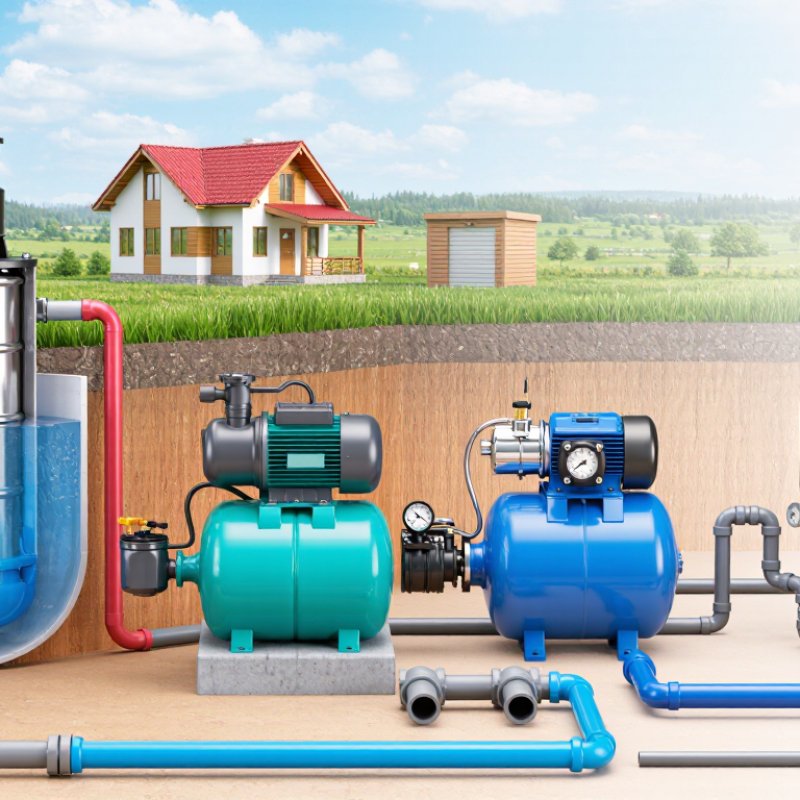
A well pressure pump moves groundwater into a home’s plumbing system. It works with a pressure tank, pipes, and a pressure switch. When a faucet opens, stored water leaves the tank. Pressure drops. The switch starts the pump. When pressure recovers, the pump stops. Simple in theory. Real systems are less forgiving.
The U.S. Environmental Protection Agency reports that about 15% of Americans rely on private wells. USGS Circular 1441 estimated 42.5 million people used self-supplied domestic groundwater in 2015. These figures show why correct pump selection matters. Submersible pumps sit underwater and push water upward efficiently from deeper wells. Jet pumps remain practical for shallow wells, but suction limits their working depth. Constant-pressure systems use variable-speed control, keeping showers steadier when several taps operate. They often reduce pressure swings, though their controls require careful setup.
Check depth, flow rate, pipe size, and electrical supply before comparing prices. A pump rated at 20 gallons per minute may disappoint if the well produces only 8. The pressure tank also needs proper sizing. Too small, and the pump may cycle repeatedly. That can increase wear. Higher pressure is not automatically better. It may stress old pipes and waste electricity. Buyers should request a measured well yield and a pump curve, not rely only on sales descriptions. This step is often skipped. It should not be.
| Well Pressure Pump Type | How It Works | Typical Well or Lift Condition | Common Residential Flow Range | Typical Pressure-Control Method | Main Advantages | Important Limitations | Best-Fit Buyer Profile |
|---|---|---|---|---|---|---|---|
| Submersible Well Pump | A sealed motor and pump assembly is installed below the water level. It pushes water upward through the drop pipe instead of pulling water from the surface. | Suitable for most modern drilled wells, including deeper wells. Pump setting depth must remain below the expected pumping water level while meeting the required total head. | Approximately 5–25 gallons per minute (GPM), depending on well yield, pump size, pipe size, and required pressure. | Pressure tank with a mechanical pressure switch, or a variable-frequency-drive controller for constant-pressure operation. | Efficient for deep wells; quiet at the surface; generally provides dependable priming because the pump is submerged; available in many flow and head configurations. | Removal may require lifting the drop pipe and electrical cable. Sand, excessive cycling, inadequate cooling flow, or dry-running conditions can shorten service life. | Most deep-well homes Buyers seeking a conventional, dependable well-water system. |
| Shallow-Well Jet Pump | A surface-mounted centrifugal pump uses an impeller to create suction and draw water through a suction pipe. The pump and suction line must be properly primed. | Generally used where the vertical lift from the pump to the pumping water level is about 25 feet or less. Actual performance depends on altitude, pipe losses, temperature, and well conditions. | Approximately 5–15 GPM for many household installations. | Pressure tank and pressure switch, commonly using a 30/50 or 40/60 PSI switch range when compatible with the system design. | Accessible for service; usually simpler to inspect; often lower installation complexity for suitable shallow wells. | Limited by suction lift; can lose prime if the suction line leaks or the foot valve fails; noisier than a submerged pump; not appropriate for deeper water levels. | Shallow wells Buyers prioritizing accessible above-ground maintenance. |
| Deep-Well Jet Pump | A surface pump works with a two-pipe ejector assembly installed in the well. Water is circulated through the ejector to create a pressure differential that lifts additional water to the surface. | Used for intermediate depths where a shallow jet pump cannot provide adequate suction, but local well conditions and ejector design support a jet system. Many installations operate at effective lifts of roughly 25–100 feet. | Approximately 5–15 GPM, with actual output strongly dependent on ejector selection and total dynamic head. | Pressure tank and pressure switch; a properly sized pressure tank helps reduce pump cycling. | Motor and pump remain accessible above ground; can serve some deeper wells without placing the motor underwater. | Usually less efficient than a correctly sized submersible pump; requires two pipes and an ejector; priming and pipe leakage can affect performance; installation is more specialized. | Intermediate-depth applications Buyers who prefer an above-ground motor and have a suitable existing system. |
| Constant-Pressure Submersible Pump with Variable-Speed Drive | A submersible pump changes motor speed in response to water demand and system pressure. The controller attempts to maintain a relatively steady pressure instead of waiting for a large pressure drop. | Suitable for wells with adequate yield and electrical service, especially homes with multiple bathrooms, irrigation zones, or fluctuating demand. | Commonly configured for approximately 5–25 GPM, subject to pump curve, well yield, and controller limits. | Electronic variable-frequency-drive controller, pressure sensor, and usually a smaller pressure tank than a traditional fixed-speed system. | More consistent shower and fixture pressure; fewer pronounced pressure swings; can reduce starts and stops when correctly configured; may improve operating efficiency at partial demand. | Higher upfront cost; electronic components require correct setup and protection; not a substitute for an adequately producing well; compatibility with generator power must be checked. | Premium comfort Homes with variable demand or buyers wanting steadier pressure. |
| Fixed-Speed Submersible Pump with Pressure Tank | The pump runs at one speed and fills a pressure tank. A pressure switch starts the pump at the cut-in pressure and stops it at the cut-out pressure. | Applicable to a wide range of drilled wells when the pump curve, well yield, storage capacity, and household demand are correctly matched. | Approximately 5–25 GPM for typical residential systems. | Pressure switch and diaphragm or bladder pressure tank. Common switch settings include 30/50 PSI or 40/60 PSI, subject to system design. | Proven control method; broad installer familiarity; straightforward troubleshooting; pressure tank provides reserve water and limits excessive starts. | Pressure varies between cut-in and cut-out settings; an undersized tank or low-yield well can cause rapid cycling; pump selection must account for total dynamic head. | Value-focused buyers Homes needing a conventional, serviceable well-pressure arrangement. |
| Booster Pump for Low-Pressure Well Systems | A booster pump increases pressure after a storage tank, cistern, or low-pressure supply source. It does not replace a properly sized well pump or create additional well yield. | Useful where water is available in a storage tank or where the existing source provides insufficient pressure but adequate volume. | Approximately 5–20 GPM for many residential booster applications. | Pressure switch, flow sensor, electronic controller, or a constant-pressure package; often paired with a pressure tank. | Can improve fixture pressure without replacing a functioning source pump; flexible for storage-tank and low-pressure layouts. | Requires sufficient incoming water volume; may run dry if protection is absent; adds another pump, control system, and maintenance point. | Low-pressure systems Properties using a cistern, storage tank, or an existing low-pressure supply. |
| Solar-Powered Submersible Well Pump | Solar panels supply direct-current power to a pump controller, which operates a submersible pump. Water is often stored in a tank so pumping can occur when sunlight is available. | Remote or off-grid wells where grid power is unavailable or expensive. System sizing depends on solar resource, seasonal demand, well yield, lift, and storage requirements. | Approximately 1–20 GPM, depending on solar array size, pump curve, water depth, and available sunlight. | Solar pump controller, water-level sensors, tank float switch, and optional pressure-boosting equipment for household distribution. | Can reduce reliance on grid power; well suited to remote locations; storage-based designs can provide water after sunset. | Flow and pressure vary with solar conditions unless battery storage or a separate pressure system is used; higher design complexity; requires freeze, lightning, and dry-run protection where applicable. | Off-grid properties Buyers with remote wells and sufficient space for solar equipment or water storage. |
Buyer note: Actual performance depends on well yield, pumping water level, total dynamic head, pipe diameter, voltage, water quality, pressure-tank sizing, and local installation requirements. A qualified well professional should size the pump from a measured well test and the system’s required flow and pressure.
Related Posts
-
Why Is My Well Pump Not Working?
-
Understanding the Benefits and Applications of Well Pressure Pumps in Modern Water Systems
-
Top 10 Water Well Pressure Pumps for Your Needs?
-
Top Guides for Choosing the Best Well Pump for Your Home
-
How to Choose a Water Well Jet Pump in 2026?
-
How to Choose the Right Well Pump for Your Water Needs