How to Choose the Right Well Pump for Your Needs?
Choosing the right well pump can be challenging. With various options available, understanding your specific needs is crucial. A well pump is a vital component for accessing groundwater. This choice impacts both efficiency and longevity.
Different types of well pumps exist. Submersible pumps are often preferred for deep wells. Jet pumps may suit shallow wells better. Each has strengths and weaknesses. Assessing your well’s depth, water flow, and pressure is essential. Factors like energy efficiency and maintenance requirements also matter.
Investing time in research pays off. Many overlook the pump's capacity, leading to insufficient water supply. Others may underestimate installation costs. Expert advice can clarify your options. The right well pump could enhance your water system significantly. Always consider experienced insights when making this decision. Choices made now will affect your water needs for years to come.
Understanding Your Water Needs and Pump Applications
When selecting a well pump, understanding your specific water needs is crucial. The average household uses about 300 gallons of water per day, according to the U.S. Geological Survey. Knowing your usage helps determine pump specifications. Assess factors such as peak demand and types of activities—irrigation, drinking, or household chores—all require different flows and pressures.
Consider your water source. The depth of the well significantly impacts pump choices. Shallow wells generally need less powerful pumps. Conversely, deeper wells may require submersible pumps. The efficiency rating is another important detail, as a pump that meets or exceeds the efficiency standard can reduce energy costs. Industry reports suggest that up to 15% of total pump energy costs can be saved with high-efficiency models.
Evaluate potential issues too. Not all setups work seamlessly; some may struggle with sediment buildup or fluctuating water levels. Regular maintenance and water analysis can prevent problems before they escalate.
Choosing the right pump keeps your water flowing smoothly. Regularly check performance and make adjustments when necessary. This approach ensures the longevity of your equipment while meeting your water needs effectively.
Types of Well Pumps: Submersible vs. Jet Pumps
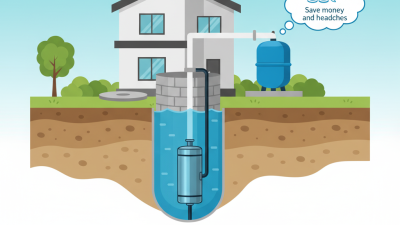
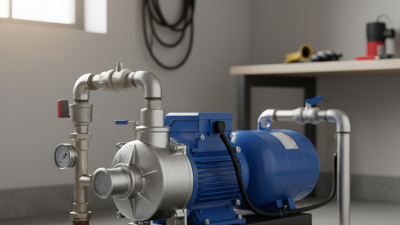
When choosing a well pump, understanding the types available is crucial. Submersible pumps are placed underwater in the well. They are efficient for deep wells, lifting water to the surface with ease. This type of pump operates quietly, reducing the disturbance to your home environment. However, if not installed correctly, they can be prone to clogs or damage due to sediment.
Jet pumps, on the other hand, are usually installed above ground. They exert suction to draw water upward. These pumps are better suited for shallow wells. They can be easier to repair, as their components are accessible. However, they may struggle with deeper groundwater sources. Sometimes, a poorly placed jet pump fails to achieve the desired water pressure.
Ultimately, the choice depends on your specific needs. Consider the depth of your well and the amount of water required. Both pump types have their strengths and weaknesses. It’s worth taking time to assess what works best for your situation. Understanding these differences can help prevent future frustrations.
Determining the Appropriate Pump Size and Capacity
Choosing the right well pump involves determining the appropriate size and capacity for your specific needs. The pump's capacity is typically measured in gallons per minute (GPM). For residential use, a flow rate of 5 to 15 GPM is often sufficient, with most homes requiring around 10 GPM to meet daily demands. This information is supported by data from the Water Systems Council, which states that understanding your household water needs is crucial.
To accurately assess your needs, consider the number of fixtures that will be supplied. A typical shower uses about 2.5 GPM, while a washing machine may use up to 3 GPM. If you have multiple fixtures running simultaneously, it's vital to calculate the maximum demand. Industry reports indicate that over-pumping can lead to reduced efficiency and excessive wear on the system. Conversely, under-pumping may result in insufficient water supply, affecting daily activities.
Pumping depth and well diameter also play a role in size determination. For deeper wells, submersible pumps are usually ideal, while shallow wells might benefit from jet pumps. Regular assessments and maintenance can help identify inefficiencies. Many homeowners overlook this, leading to decreased performance over time. Investing time to understand your needs and the specifics of your well ensures a reliable and efficient water supply.
Well Pump Size and Capacity Comparison
This chart illustrates the flow rate (in gallons per minute) for different types of well pumps, helping you understand which pump might be suitable for your needs based on capacity.
Assessing Power Source Options for Well Pumps
Choosing the right power source for your well pump is crucial. It can impact efficiency and reliability. Well pumps typically operate with one of three power sources: electricity, fuels, or solar energy. Each option has its pros and cons.
Electric pumps are popular for their efficiency. They can provide consistent performance. However, they rely on a steady power supply. During outages, you may face challenges. Fuel-powered pumps offer mobility and flexibility but require regular maintenance. They can be noisy and less environmentally friendly. Solar-powered pumps present an innovative solution. They harness renewable energy, reducing carbon footprints. Yet, their efficiency depends on sunlight. In regions with limited sun, performance may vary.
When assessing these sources, consider your specific needs. Think about availability and your environmental preferences. Your decision should reflect practical aspects, such as cost and maintenance. A well-informed choice will ensure a reliable water supply tailored for your situation. Strive to gather detailed information before making a final decision. Aim to balance efficiency and sustainability.
Maintenance and Longevity Considerations for Well Pumps
Maintaining a well pump is crucial for its longevity and efficiency. Regular maintenance can significantly extend the lifespan of your pump. Reports indicate that a well pump can last up to 15 years with proper care. Neglect leads to reduced performance and costly repairs. Many users are unaware that simple tasks, like checking the pressure switch and inspecting the pump for leaks, can prevent major issues.
Monitoring water quality is another essential aspect. Contaminated water can damage pump components. According to industry experts, corrosion from minerals can decrease efficiency by 20% over time. Regular water testing is recommended. It helps identify contaminants early, allowing for prompt treatment. This proactive approach can prevent pumps from breaking down unexpectedly.
Users should also consider the environment where the pump operates. Extreme temperatures can affect durability. Pumps exposed to harsh weather can fail sooner than anticipated. It's advisable to encase pumps in protective housing. This will shield them from elements and enhance their operational lifespan. Many well owners overlook these variations, putting their investment at risk.
How to Choose the Right Well Pump for Your Needs? - Maintenance and Longevity Considerations for Well Pumps
| Pump Type |
Suitable Use |
Lifespan (Years) |
Maintenance Frequency |
Common Issues |
| Submersible Pump |
Deep wells, residential use |
10-15 |
Annual |
Clogged intake, electrical failure |
| Jet Pump |
Shallow wells, agricultural use |
7-10 |
Biannual |
Loss of prime, air leaks |
| Centrifugal Pump |
Large volume applications |
10-20 |
Quarterly |
Overheating, cavitation |
| Hand Pump |
Emergency use, small scale |
20+ |
As needed |
Worn seals, corrosion |