| Plunger Lift |
A free-traveling plunger moves between the surface and the bottom of the well.
Reservoir gas pressure builds below the plunger and lifts accumulated liquid to the surface
during an automated cycle.
|
Usually low to moderate liquid loading; often selected when the well can build sufficient
casing pressure between cycles.
|
Commonly suitable for shallow to medium-depth wells; actual depth depends on tubing size, pressure, and cycle timing. |
Excellent for gas wells
Uses the well's gas energy and does not require a downhole motor. |
- Low operating energy consumption
- Simple downhole equipment
- Can reduce liquid loading and preserve gas deliverability
- Well suited to intermittent production
|
- Requires adequate pressure buildup and gas volume
- Less effective with continuous high liquid rates
- Cycle timing can cause unstable production
|
Declining gas wells with intermittent liquid loading, adequate shut-in pressure, and relatively clean tubing. |
| Beam Rod Pump |
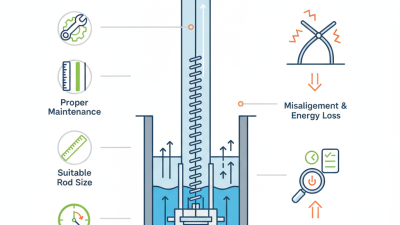
A surface beam unit reciprocates a rod string. The downhole traveling and standing valves
alternately open and close, moving liquid from the pump barrel to the surface.
|
Approximately 50–1,500 barrels of liquid per day, depending on pump size, stroke, speed, and well conditions. |
Commonly used from shallow wells to several thousand meters; depth is limited by rod loading, deviation, and tubing design. |
Low to moderate
Free gas can reduce pump fillage and cause gas interference. |
- Well-established operating principle
- Good control of liquid production
- Suitable for variable pumping speeds
- Can be serviced with conventional well-intervention equipment
|
- Many moving parts at the surface and downhole
- Rod and tubing wear in deviated wells
- Gas separation or a downhole gas anchor may be needed
|
Gas wells with moderate liquid production, sufficient casing space, and manageable deviation. |
| Progressive Cavity Pump (PCP) |
A helical rotor turns inside an elastomeric stator, creating sealed cavities that transport
liquid continuously from the intake to the surface.
|
Approximately 50–3,000 barrels of liquid per day, depending on pump geometry, speed, and fluid viscosity. |
Typically shallow to medium depth; practical depth is affected by torque, rod strength, temperature, and deviation. |
Low to moderate
Large amounts of free gas can reduce volumetric efficiency and damage the elastomer. |
- Handles viscous fluids and some solids relatively well
- Low shear compared with many centrifugal pumps
- Continuous, relatively smooth liquid flow
- Good speed control with a variable-frequency drive
|
- Elastomer compatibility limits temperature and fluid selection
- Free gas can cause gas locking and poor pump fillage
- Rotor, stator, and rod-string wear must be monitored
|
Gas wells producing viscous water, condensate, or solids where a controlled, low-to-moderate liquid rate is required. |
| Electric Submersible Pump (ESP) |
A downhole electric motor drives a multistage centrifugal pump. Each impeller adds head,
allowing the pump to lift high liquid volumes through the production tubing.
|
Approximately 500–20,000 barrels of liquid per day, depending on pump configuration and intake conditions. |
Suitable for medium to very deep wells when motor temperature, cable rating, and workover access are acceptable. |
Low to moderate without gas handling
Gas separators, gas handlers, or special pump designs may be required. |
- High liquid-rate capability
- Compact downhole installation
- Adjustable operating range with variable-speed control
- Effective for wells with heavy and continuous liquid loading
|
- Free gas can cause gas locking and reduced head
- Requires reliable electricity and surface controls
- Downhole electrical failures may require a costly workover
- High temperature and solids can shorten equipment life
|
High-rate liquid-loading gas wells with reliable power, adequate pump submergence, and sufficient workover capability. |
| Hydraulic Jet Pump |
A high-pressure power fluid passes through a nozzle, converting pressure into velocity.
The resulting low-pressure zone entrains formation fluid, and the combined stream returns
to the surface through the production tubing or annulus.
|
Approximately 100–10,000 barrels of liquid per day, depending on power-fluid pressure, nozzle size, and well geometry. |
Suitable for medium to deep wells and deviated wells where retrievable downhole equipment is valuable. |
Moderate to good
Can tolerate gas better than many centrifugal systems, but efficiency decreases as free-gas volume rises. |
- No downhole moving parts in the pump assembly
- Retrievable by circulating or reverse-circulating fluid in many designs
- Works in deviated and high-temperature wells
- Flexible operating range through nozzle and power-fluid changes
|
- Needs high-pressure surface pumps and power fluid
- Lower efficiency than many direct mechanical systems
- Requires careful fluid filtration and pressure management
|
Deep, deviated, or high-temperature gas wells where workover flexibility and downhole simplicity are priorities. |
| Gas Lift |
Compressed gas is injected into the production tubing through gas-lift valves.
The injected gas reduces the average density of the tubing fluid and lowers flowing bottomhole pressure,
allowing formation pressure to lift the liquid to the surface.
|
Broad operating range; commonly used for moderate to high liquid rates when injection gas is available. |
Suitable for medium to very deep wells, subject to injection pressure, valve spacing, and available compression. |
Excellent gas compatibility
Gas is the lifting medium, although compression and injection capacity are required. |
- Few downhole moving parts
- Good performance in deviated wells
- Suitable for high-temperature environments
- Can handle changing liquid rates with injection control
|
- Requires compression, injection facilities, and gas availability
- Operating cost can rise with compression demand
- Excessive injection can reduce efficiency and increase backpressure
|
Gas fields with available high-pressure gas, centralized compression, and multiple wells requiring artificial lift. |
| Velocity String |
A smaller-diameter tubing string is installed inside the production tubing.
The reduced flow area increases gas velocity, helping carry liquid droplets to the surface
and delaying liquid accumulation.
|
Not a conventional pump; effective mainly for low to moderate liquid loading. |
Often used in mature, low-pressure wells where the existing tubing is too large to maintain adequate gas velocity. |
Excellent gas-well fit
Uses produced gas rather than a mechanical pumping system. |
- Simple downhole concept
- No pump motor or continuous external power required
- Can extend the productive life of declining gas wells
- Useful when liquid rates are relatively small
|
- Does not remove large liquid volumes
- Additional tubing can increase friction pressure loss
- Incorrect sizing may restrict gas production
|
Low-pressure gas wells with low liquid rates and insufficient gas velocity in the original tubing. |
| Practical Selection Priorities for 2026 |
| First Check: Liquid Loading |
Estimate the current and forecast water or condensate rate. Plunger lift and velocity strings are usually considered
first for low liquid loading; rod pumps, PCPs, jet pumps, ESPs, or gas lift become more relevant as the liquid rate increases.
|
| Second Check: Free-Gas Volume |
High gas volume at the pump intake can cause gas interference or gas locking in mechanical pumps.
Use a downhole gas separator, gas handler, suitable pump design, or a gas-based lift method where appropriate.
|
| Third Check: Well Geometry and Depth |
Deviation, dogleg severity, depth, tubing size, temperature, casing clearance, and workover access strongly affect
the selection. Jet pumps and gas lift are often attractive where deviation or retrievability is a major concern.
|
| Fourth Check: Surface Facilities |
Confirm the availability of electricity, compression, power fluid, controllers, separators, disposal capacity,
and maintenance personnel before selecting the downhole system.
|
| Final Check: Life-Cycle Cost |
Compare installation cost, energy consumption, expected run life, intervention frequency, spare-equipment requirements,
emissions, and production stability rather than comparing purchase price alone.
|
|
Important: The operating ranges shown are indicative engineering ranges, not guaranteed performance limits.
Final selection should be based on a nodal analysis using reservoir pressure, inflow performance, fluid properties,
gas-to-liquid ratio, temperature, solids content, tubing design, and available surface facilities.
|