
How to Choose the Right Water Jet Pump?
Choosing the right water jet pump begins with understanding the job, not chasing the highest pressure rating. A pump that performs well in a clean workshop may struggle with abrasive water, changing temperatures, or continuous operation. Before comparing models, identify the required flow rate, working pressure, water quality, power supply, and duty cycle. These details shape performance, operating cost, and service life.
Look closely at the pump’s construction. Stainless steel components may resist corrosion, while ceramic plungers and reliable seals can support demanding use. Ask whether replacement parts are available and whether qualified technicians can service the unit locally. A clear warranty matters, but real maintenance support matters more. Check the manufacturer’s test data, safety guidance, and pressure ratings instead of relying on impressive advertising.
Application experience often reveals problems that brochures overlook. For example, a water jet pump used for surface cleaning may need different flow characteristics than one supporting cutting equipment. Excessive pressure can damage delicate surfaces, waste energy, or create unsafe spray patterns. Insufficient flow can reduce cleaning speed and overload the system. It is easy to focus on peak specifications and miss daily practicality. I have found that users sometimes underestimate inlet filtration and routine seal inspection. That mistake can become expensive.
The best choice balances pressure, flow, efficiency, durability, noise, and total ownership cost. Speak with an experienced supplier when conditions are unusual or technically demanding. Request performance information under realistic operating conditions. A careful decision may take longer, but it reduces surprises after installation. The strongest water jet pump is not always the largest or most powerful model. It is the one that reliably matches the work.
Understanding Water Jet Pump Types and Operating Principles
How to Choose the Right Water Jet Pump?
Understanding Water Jet Pump Types and Operating Principles
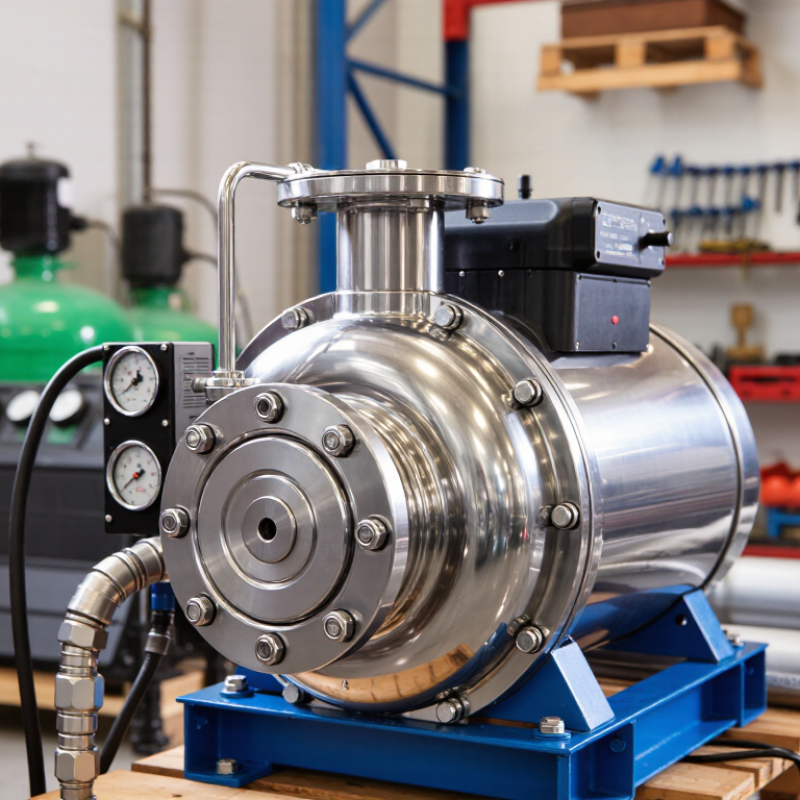
Choosing a water jet pump starts with its working principle, not its advertised flow rate. A centrifugal jet pump uses an impeller to create pressure and a venturi nozzle to improve suction. An ejector-style pump places the nozzle in a separate assembly, often inside a well or tank. Submersible jet systems push water from below, reducing priming problems. That difference matters.
During field checks, I look at lift, discharge distance, pipe diameter, water temperature, and expected duty cycle. Shallow-water applications may suit a single-pipe design, while deeper sources commonly require a two-pipe arrangement. The nozzle accelerates a small water stream, creating a low-pressure zone that draws additional water inward. Pressure then rebuilds inside the diffuser. A narrow intake pipe can starve the pump, even when the motor seems powerful. Measure twice.
Material selection also affects reliability. Clean water, sandy water, and mildly corrosive water place different demands on seals and impellers. Check the pump curve at your actual flow and pressure, rather than trusting maximum figures. Install a strainer, verify foot-valve seating, and watch for air leaks around threaded joints. Small bubbles can cause noisy operation and unstable delivery. I have seen oversized pumps cycle rapidly, wasting energy and shortening component life. That choice looked efficient on paper. In practice, it was not.
How to Choose the Right Water Jet Pump? - Understanding Water Jet Pump Types and Operating Principles
| Water Jet Pump Type | Operating Principle | Typical Pressure / Lift Capability | Typical Flow Characteristics | Suitable Applications | Main Advantages | Important Limitations | Selection Guidance |
|---|---|---|---|---|---|---|---|
| Shallow-Well Jet Pump | A centrifugal impeller pressurizes the water. A jet nozzle and venturi throat convert pressure into velocity, creating suction that draws water into the pump. | Generally suitable for suction lifts up to approximately 7–8 m under favorable conditions. Actual performance decreases with altitude, pipe losses, and water temperature. | Moderate flow with pressure that changes noticeably as demand varies. Performance depends strongly on suction-pipe diameter and airtightness. | Small wells, household water supply, irrigation, garden systems, and transfer from open tanks. | Simple installation, self-priming capability after initial filling, and relatively easy maintenance. | Cannot reliably lift water from deep levels because atmospheric pressure limits suction. Air leaks can prevent priming. | Choose this type when the vertical distance from the water surface to the pump inlet is within the practical suction limit and the required flow is moderate. |
| Deep-Well Jet Pump | A two-pipe arrangement sends pressurized water down to a submerged ejector. The nozzle creates a high-velocity jet, entrains well water, and returns the combined flow to the surface. | Can serve greater well depths than shallow-well designs; practical depth varies widely with ejector design, pipe size, and required discharge pressure. | Usually lower hydraulic efficiency and lower flow than a properly sized submersible pump at comparable depth because some water is recirculated through the jet assembly. | Deeper residential wells, remote water systems, and installations where a surface-mounted motor is preferred. | Motor and controls remain accessible above ground, and the pump can tolerate some well conditions that may be unsuitable for certain submerged equipment. | Requires two well pipes, careful nozzle and venturi sizing, and more complicated installation than a shallow-well jet pump. | Consider it when maintenance access above the well is important and the well depth exceeds the practical range of a shallow-well pump. |
| Liquid Jet Ejector / Eductor | A motive liquid passes through a nozzle and accelerates. The resulting low-pressure zone entrains a secondary liquid, and both streams mix before leaving through a diffuser. | Suction lift and discharge pressure depend on motive pressure, nozzle geometry, back pressure, and the density and viscosity of both liquids. | The motive flow is sacrificed to move the secondary flow, so total flow can be high while energy efficiency is commonly lower than that of a mechanical pump. | Chemical transfer, drainage, bilge service, slurry handling, mixing, foam removal, and applications requiring no rotating parts in the pumped liquid. | No electric motor at the pumping point, few moving parts, good tolerance of dirty liquids, and easy installation in hazardous or wet areas. | Requires a continuous motive-fluid supply and may have relatively high operating costs due to recirculation or motive-fluid consumption. | Select this type when reliability, contamination tolerance, or hazardous-area suitability is more important than maximum energy efficiency. |
| Venturi Injector | Water accelerates through a constricted section, reducing static pressure and drawing a secondary liquid or gas into the main stream. | Usually provides limited suction lift and low secondary-flow pressure. Performance is highly sensitive to inlet pressure and downstream back pressure. | Suitable for relatively small dosing or entrainment flow compared with the motive-water flow. | Fertilizer injection, chemical dosing, aeration, foam generation, and simple liquid mixing systems. | Compact, inexpensive, has no moving parts, and can meter or mix fluids without a separate injection pump. | Causes pressure loss in the main line and may stop drawing properly when supply pressure falls or discharge pressure rises. | Use it for simple injection or mixing where the available line pressure can cover both the injector loss and the required downstream pressure. |
| Water-Jet Vacuum Pump | A high-velocity water jet entrains air or vapor in a suction chamber. The mixture is discharged through a diffuser, producing vacuum without mechanical moving parts. | Can create a useful vacuum for air removal and degassing; achievable vacuum is limited by water vapor pressure, temperature, and motive-water pressure. | The required water flow may be substantial relative to the amount of gas removed, especially at deeper vacuum levels. | Priming, vacuum drainage, degassing, laboratory processes, condenser air removal, and wet vacuum service. | Handles wet gas and condensable vapor, has no oil contamination, and operates with minimal mechanical maintenance. | Consumes water continuously and may require separation, cooling, or treatment of the discharge mixture. | Choose it when a clean, wet-running vacuum source is acceptable and a reliable supply of motive water is available. |
| Centrifugal Jet Booster System | A centrifugal pump supplies the main pressure and a jet assembly improves suction or pressure response by accelerating part of the flow through a nozzle and diffuser. | Commonly used for moderate pressure boosting; actual head depends on impeller diameter, motor speed, system resistance, and operating point. | Provides stable service over a defined operating range but may recirculate water internally, reducing efficiency compared with a direct centrifugal arrangement. | Building water boosting, irrigation zones, rainwater systems, and transfer applications with variable demand. | Can improve priming and suction behavior while delivering useful discharge pressure from a compact surface-mounted package. | May be noisier and less efficient than a correctly selected standard centrifugal or submersible pump for continuous high-flow duty. | Compare the complete pump curve with the system curve; do not select only by maximum flow or maximum pressure values. |
| Key Selection Criteria | Selection should match the pump operating principle to the fluid, required flow, total dynamic head, suction conditions, and available motive energy. | Calculate static lift plus friction losses, fittings, pressure requirements, and any elevation changes. Include a safety margin without substantially oversizing the pump. | Specify the required flow at the required head, not the maximum advertised capacity. Check the duty point against the pump curve. | Also evaluate water quality, temperature, entrained air, solids content, operating hours, noise limits, installation space, and maintenance access. | A correctly sized pump improves reliability, energy consumption, priming performance, and service life. | Oversizing can cause excessive cycling, poor efficiency, cavitation risk, pressure problems, and unnecessary purchase and operating costs. | For deep suction, high efficiency, or continuous-duty service, compare a jet system with a properly sized submersible or conventional centrifugal pump before making a final decision. |
Note: Performance ranges are typical engineering guidance only. Final selection should be based on the manufacturer-independent pump curve, system curve, fluid properties, installation conditions, and applicable safety requirements.
Related Posts
-
2026 Best Water Jet Pump Types for Global Buyers
-
What is a Water Jet Pump and How Does It Work in 2026?
-
How to Choose the Best Water Jet Pump for Your Needs?
-
Top Benefits of Flow Jet Water Pump for Your Home and Garden Needs
-
What Is a Flow Jet Water Pump and How Does It Work?
-
7 Tips to Choose the Right Flow Jet Water Pump