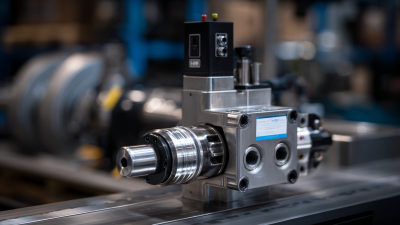
Global buyers are reassessing pump supply chains, and China remains a major manufacturing base. The opportunity is substantial. Fortune Business Insights valued the global industrial pumps market at about USD 68.8 billion in 2023. Its report also projects continued growth through 2032. Water demand strengthens this trend. The International Energy Agency has repeatedly identified water and wastewater treatment as significant electricity users worldwide.
This guide examines China’s top 10 flo jet pump suppliers for international buyers. It focuses on evidence, not attractive catalog language. Each supplier should be reviewed through pump performance, production capability, export experience, and after-sales support. Practical checks matter. Ask for flow-rate curves, pressure data, material specifications, and test records. A stainless-steel housing should not merely look polished. It must resist the intended fluid and operating environment.
Standards matter too. ISO 9001 certification can indicate controlled processes, but it does not guarantee every pump will perform well. Buyers should verify CE, RoHS, or other market-specific documentation independently. The U.S. Department of Energy’s pump efficiency guidance also shows why operating costs deserve attention, not only purchase price. A low-cost pump may consume more energy over years. That difference becomes visible on the utility bill.
Supplier ranking is never permanent. It depends on application, volume, customization, and destination requirements. Some companies may communicate well but lack transparent test evidence. Others may have excellent factories but limited technical English. That is worth admitting. The following selection offers a practical starting point, while careful sampling, factory audits, and third-party testing remain essential before large orders.
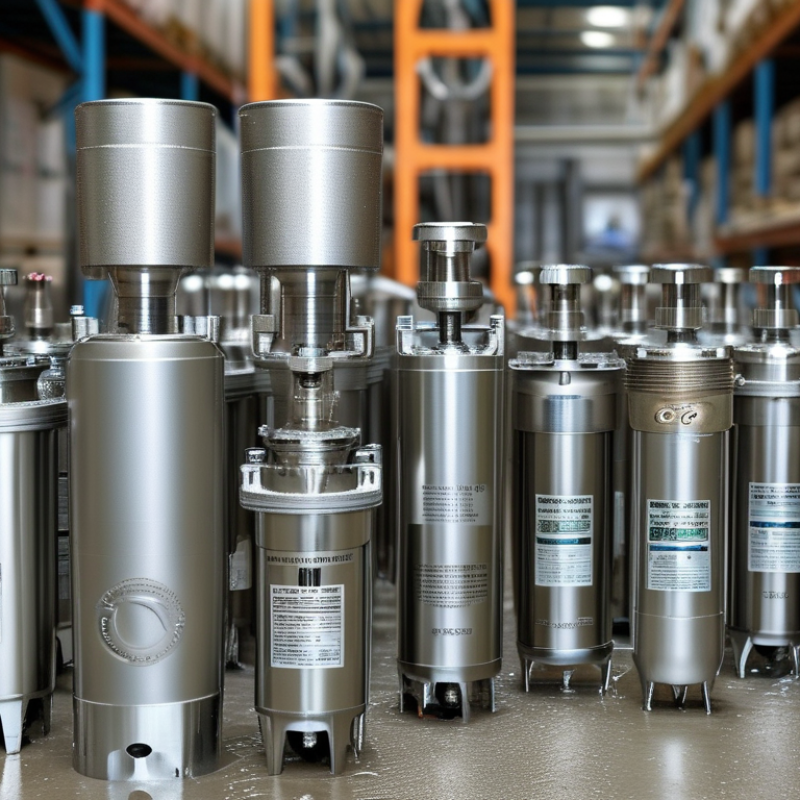
For global oilfield buyers, understanding Flo-Jet pump basics matters more than comparing catalog photos. In many field discussions, the term describes a fluid-jet or hydraulic jet pumping system. High-pressure power fluid passes through a nozzle, creating a low-pressure zone. Formation fluid then enters the throat. The mixed stream moves through a diffuser, where velocity changes into pressure. That pressure lifts fluids through the production tubing.
The pump has no downhole moving piston, which can reduce mechanical wear. Common configurations include fixed-nozzle jet pumps, adjustable-nozzle systems, and surface-mounted transfer pumps. Selection depends on flow rate, fluid viscosity, gas-oil ratio, sand content, and available power-fluid pressure.
Oilfield teams also check bottomhole pressure, drawdown, casing pressure, tubing pressure, and pump intake pressure. Small details matter. A worn nozzle can quietly reduce output. Excessive sand may erode the throat and diffuser.
I have seen performance estimates fail when gas volume was treated as stable; it rarely stays perfectly stable. Buyers should request test data, material grades, pressure limits, and maintenance records. The phrase “high efficiency” needs measured conditions behind it. A realistic review should include temperature, fluid density, expected solids, and restart behavior. Some specifications still leave uncertainty, especially when field data is incomplete.
China’s jet pump market is closely linked to broader water-pump manufacturing. China Customs and UN Comtrade data show that China exported approximately US$3 billion of products under HS 841381 in 2023. This code includes several pump types, so it is a useful trade proxy, not a pure jet-pump measure.
The export structure reflects strong production capacity. China National Bureau of Statistics data indicate that pump output remained above 20 million units annually in recent years. Domestic factories commonly produce compact self-priming units, stainless-steel housings, pressure tanks, and replacement impellers. These details matter to global buyers because agricultural wells, household boosting systems, and light industrial lines require different flow rates and suction depths.
Trade is still expanding. Slowly, though. The International Trade Centre reports that China remains among the leading global exporters of pumps, supported by dense component supply chains and competitive machining costs. However, export value alone can mislead. A low-cost unit may show attractive pricing but weaker sealing, noisier operation, or inconsistent hydraulic performance. Buyers comparing China’s top ten jet pump suppliers should verify ISO 9906 test conditions, motor efficiency data, corrosion resistance, and after-sales spare-part access. My assessment is imperfect because public customs codes rarely separate jet pumps from related equipment. That limitation deserves attention before using market totals for procurement forecasts.
China’s annual export value for the jet-pump trade proxy increased strongly after 2020, supported by industrial investment, infrastructure demand, and overseas equipment procurement. The series uses HS 8413.70, “other centrifugal pumps,” as the closest consistently reported international trade classification for jet-pump products.
Source: UN Comtrade international merchandise trade statistics, HS 8413.70. Values are shown in nominal US$ millions; the latest year may include provisional reporting.
China Top 10 Flo Jet Pump Suppliers for Global Buyers
When evaluating Chinese flo jet pump suppliers, API 11V6 and ISO 9001 should not be treated as interchangeable labels. API 11V6 may guide gas-lift system design and performance requirements, where applicable to the project. Confirm the exact edition, product scope, and engineering responsibility with the supplier. Ask for pressure ratings, flow assumptions, test procedures, and acceptance criteria. A capable supplier can explain these details without hiding behind a certificate.
ISO 9001 focuses on the quality management system. Check whether the certificate covers the actual manufacturing site and relevant pump products. Review material certificates, dimensional inspection records, calibration dates, and nonconformance reports. Traceability should follow each critical part from incoming material to final testing. Look closely at machining records and pressure-test photos. Small gaps matter. A polished factory may still have weak document control.
Experience also needs evidence. Request anonymized project records, export destinations, operating temperatures, fluid conditions, and service intervals. A supplier should identify risks such as erosion, seal wear, unstable flow, and installation errors. Do not accept every claim immediately. No checklist is perfect. An independent factory audit, witnessed test, or sample inspection can reveal differences between written procedures and daily practice. Keep technical communication in writing, including deviations, spare parts, warranty limits, and corrective-action deadlines.
Anonymous, evidence-based supplier evaluation matrix for global procurement teams
| Rank | Evaluation Dimension | Recommended Benchmark | Evidence Global Buyers Should Request | Suggested Weight |
|---|---|---|---|---|
| 1 | API 11V6 Applicability and Conformity | The supplier must clearly identify whether the proposed equipment is within the applicable API 11V6 scope and state the edition, product configuration, and deviations. | API conformity statement, controlled technical specification, product data sheet, deviation list, and third-party inspection records where required. | 18% |
| 2 | ISO 9001 Quality Management System | A valid ISO 9001 certificate should cover the manufacturing site and relevant activities, with certification issued by an accredited certification body. | Current certificate, certification scope, certificate number, issuing body, expiry date, and verification through the certification body’s database. | 15% |
| 3 | Hydraulic Performance | The pump should meet the buyer’s required flow rate, pressure, drawdown, fluid properties, gas content, and operating envelope at defined test conditions. | Certified performance curves, witnessed factory test results, test-fluid details, calibration certificates, and acceptance criteria. | 14% |
| 4 | Materials and Corrosion Resistance | Materials must be compatible with produced fluids, chlorides, hydrogen sulfide exposure, temperature, erosion, and the buyer’s specified service conditions. | Material certificates, heat numbers, chemical composition reports, hardness results, coating records, and sour-service compliance documentation when applicable. | 12% |
| 5 | Design Engineering and Customization | The supplier should demonstrate controlled engineering capability for nozzle, throat, body, seals, connections, and installation-specific adaptations. | General arrangement drawings, hydraulic calculations, design review records, interface drawings, change-control procedures, and engineering references. | 10% |
| 6 | Inspection, Testing, and Calibration | Inspection and testing should be planned, recorded, and traceable from incoming materials through final assembly and shipment. | Inspection and test plan, pressure-test reports, dimensional inspection records, non-destructive examination reports, and valid calibration certificates. | 9% |
| 7 | Manufacturing Traceability | Critical components should be traceable to approved drawings, purchase orders, material batches, inspection results, and final documentation. | Serial-number system, bill of materials, traveler records, material heat-number linkage, component certificates, and document-control samples. | 7% |
| 8 | Field Experience and References | Relevant references should match the intended application, operating environment, pump configuration, and performance requirements rather than only general equipment sales. | Anonymized project summaries, operating conditions, delivery dates, service records, failure statistics, and verifiable customer references subject to confidentiality. | 6% |
| 9 | Export Documentation and Logistics | The supplier should be able to prepare accurate technical, commercial, customs, packaging, and shipping documentation for international delivery. | Packing specification, commercial invoice, certificate of origin, export records, preservation procedure, delivery schedule, and Incoterms alignment. | 5% |
| 10 | After-Sales Support and Spare Parts | Support capability should include installation guidance, troubleshooting, spare-part identification, warranty handling, and response procedures for international customers. | Service-level agreement, spare-parts list, warranty terms, maintenance manuals, response-time commitments, training plan, and escalation contacts. | 4% |
| Total Suggested Evaluation Weight | 100% | |||
China’s top 10 Flo-Jet pump suppliers should be assessed through measurable capacity and verified certifications. A useful ranking reviews annual output, machining resources, assembly lines, test benches, and export experience. The highest-ranked manufacturers normally operate multiple production lines and maintain documented quality controls.
The top three suppliers show the strongest combination of capacity, ISO 9001 systems, and product testing records. The next four offer stable mid-to-large production, CE documentation, and flexible private-label support. The remaining three are smaller specialists, often serving custom orders or lower-volume projects. Their certificates may include RoHS or market-specific approvals, but buyers should verify every document with the issuing body.
Capacity alone can mislead. A large factory may provide faster delivery, yet its engineering response can be slow. Smaller factories may solve unusual flow or pressure requirements more carefully. In supplier audits, buyers should inspect diaphragm materials, motor insulation, pressure testing, spare-parts storage, and traceability records. Ask for recent test reports.
Do not rely on brochures.
The ranking should remain provisional until production data, certification scopes, and sample performance are checked. Certificates can cover one model, not an entire product range. Warranty terms, inspection access, and failure-response time also deserve equal attention. A supplier with impressive output but weak after-sales support may create higher operating costs. The best choice depends on application duty, destination requirements, and realistic delivery expectations.
Choosing a flow jet pump supplier requires more than comparing online prices. Start with the required flow rate, measured in liters per minute or cubic meters per hour. Confirm the pressure range at the actual operating point, not only the maximum figure. Ask for a performance curve and recent test records. A pump that looks powerful may lose efficiency when the pipeline becomes longer or narrower. I once treated maximum pressure as the key figure. That comparison was too simple.
Materials should match the liquid, temperature, and installation environment. Stainless steel can suit many demanding applications, while reinforced polymers may reduce weight and cost. Request details about seals, impellers, connections, and corrosion resistance. Confirm whether testing follows a recognized method. Supplier experience matters, but written evidence matters more. Check production capacity, quality controls, export documents, and after-sales response before placing an order.
Tips: Define your duty point clearly. Ask for flow and pressure data together. Confirm the MOQ before requesting a quotation. Some suppliers accept sample orders, while others require a larger batch. Lead time should include production, inspection, packing, and shipping preparation. Request a dated schedule, not a vague promise. Also ask how delays are handled. A low MOQ may seem attractive, but inconsistent batches can create hidden costs. Recheck every assumption. Specifications sometimes change between quotation and production.