Hydraulic oil pumps play a crucial role in various industrial applications. According to a report from Grand View Research, the global hydraulic pump market is expected to reach $24.60 billion by 2025. This growth highlights the increasing demand for hydraulic systems in construction, manufacturing, and automotive sectors. Understanding the different types of hydraulic oil pumps is essential for optimizing performance and efficiency in these applications.
There are several designs of hydraulic oil pumps, each serving specific purposes. Gear pumps and piston pumps are among the most common types. Gear pumps are noted for their simplicity and reliability, while piston pumps offer higher pressure capabilities. However, even with these advantages, misconceptions about their maintenance persist. Proper care and selection of the right pump can significantly affect longevity and functionality.
Choosing the right hydraulic oil pump requires careful consideration. Factors such as flow rate, application type, and operating environment weigh heavily on this decision. Industry experts emphasize the importance of customization to meet specific project requirements. However, many engineers may overlook these details, leading to inefficiencies. Proper knowledge can greatly enhance the performance of hydraulic systems, making it essential to understand the various options available.
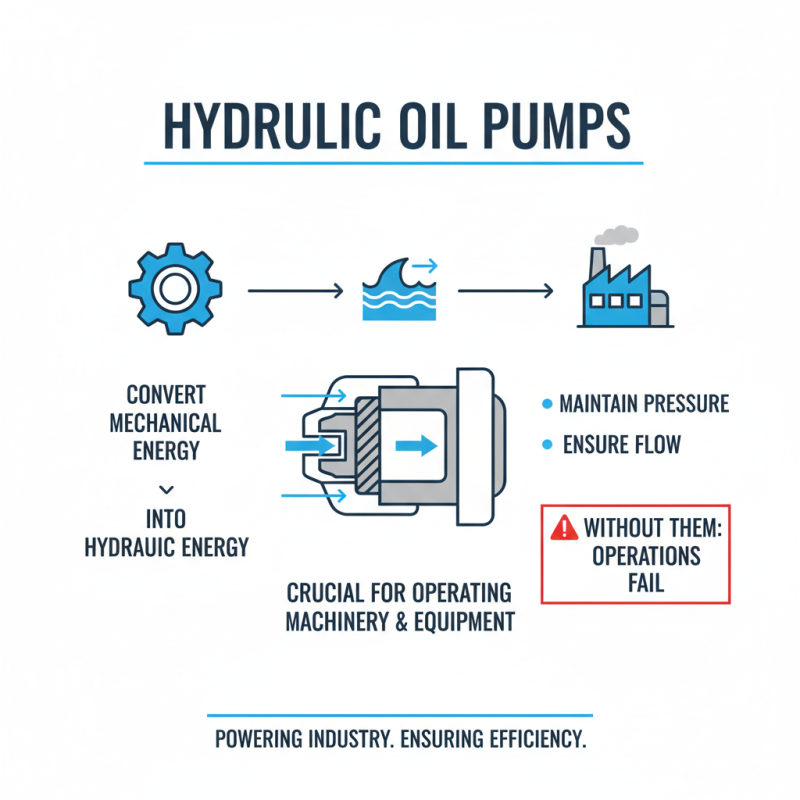
Hydraulic oil pumps play a vital role in various industries. They convert mechanical energy into hydraulic energy. This process is crucial for operating machinery and equipment. Hydraulic systems rely on oil pumps to maintain pressure and flow. Without them, operations would suffer significantly.
In construction, hydraulic oil pumps are used in excavators and loaders. These machines require precise control and powerful lifting capabilities. Similarly, in manufacturing, they help in automation and material handling. The correct pump type ensures efficiency and safety. However, selecting the right pump can be challenging. Each application has its own requirements.
Maintenance is another area needing attention. Hydraulic systems can fail if not properly cared for. Regular checks can prevent costly breakdowns. It’s important to choose the right oil. Not all oils are suitable for every pump. Understanding these factors can improve overall performance.
Hydraulic oil pumps are vital in various industries. Understanding their types can enhance efficiency. Generally, hydraulic oil pumps fall into two categories: positive displacement and non-positive displacement. Positive displacement pumps move a fixed amount of fluid per cycle, making them ideal for high-pressure applications. They provide consistent flow and high efficiency.
Non-positive displacement pumps, on the other hand, rely on the kinetic energy of fluids. They work well for low-pressure situations. However, they may not deliver the same power as positive displacement options. Each type has its advantages and challenges. For instance, a positive displacement pump can be louder and often more complex than non-positive alternatives. In contrast, non-positive pumps may struggle to maintain pressure consistently.
Understanding these differences is crucial. Users should also consider factors like maintenance and cost. Many overlook these aspects, leading to inefficiencies. Choosing the right pump isn't always straightforward. Each project may require careful evaluation. What works well in one scenario might not in another. Keep this in mind when selecting a hydraulic oil pump.
Gear pumps play a crucial role in hydraulic systems. They are renowned for their simple design and efficient performance. In the hydraulic oil market, gear pumps account for about 30% of total pump sales. This is due to their reliability and ease of maintenance.
Primary features of gear pumps include consistent flow output and high-pressure capabilities. These pumps can operate at pressures exceeding 3000 psi, making them suitable for demanding applications. They are often used in construction, agriculture, and manufacturing sectors. However, they may exhibit noise issues and higher wear rates under certain conditions.
Applications of gear pumps vary widely. In mobile machinery, they support fluid transfer and powering hydraulic systems. In manufacturing, gear pumps provide precise lubrication for machinery parts. Although effective, they can suffer from efficiency loss at low viscosities. Addressing this may require selecting the right pump size and type. Understanding these aspects is crucial for optimizing performance.
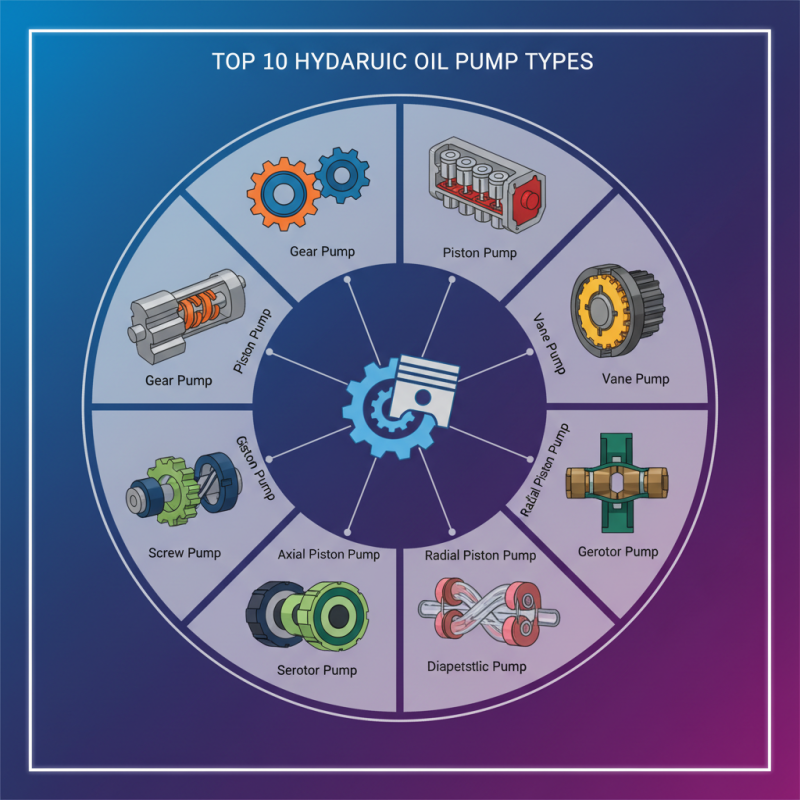
The following chart illustrates the common types of hydraulic oil pumps, highlighting their flow rates (in L/min) and key applications. Each pump type serves distinct functions based on efficiency and usage scenarios.
Piston pumps are a vital component in hydraulic systems. They offer a reliable solution for various industries, from construction to manufacturing. The efficiency of piston pumps can reach up to 95%, making them a popular choice. They often provide high pressure in compact designs. However, they can be more expensive than other types.
Different designs of piston pumps serve specific applications. Axial piston pumps work well for mobile machines, while radial piston pumps excel in stationary setups. Each type has its unique benefits and potential drawbacks. For example, axial piston pumps may struggle with cavitation conditions. They can also experience wear over time, raising maintenance costs.
According to a recent industry report, piston pumps represent 30% of the hydraulic pump market. This shows their significance and the need for careful selection. Despite their performance advantages, choosing the right pump type is crucial. Operators must consider operating conditions and potential risks. Balancing cost, efficiency, and durability is never straightforward.
| Pump Type | Description | Advantages | Common Applications |
|---|---|---|---|
| Gear Pump | Uses gears to pump fluid through mechanical action. | Simple design, high reliability, good for low-viscosity fluids. | Industrial machinery, lubrication systems. |
| Vane Pump | Consists of vanes that slide in and out of a rotor. | Good efficiency, quiet operation. | Automotive systems, construction equipment. |
| Piston Pump | Utilizes pistons to create pressure in the hydraulic fluid. | High pressure capabilities, versatile in applications. | Hydraulic presses, heavy machinery. |
| Diaphragm Pump | Uses a diaphragm to move fluid in and out of a chamber. | Can handle corrosive fluids, self-priming capabilities. | Chemical processing, food industry. |
| Peristaltic Pump | Moves fluid through compressing a hose using rollers. | Gentle handling of fluids, ideal for shear-sensitive fluids. | Laboratories, pharmaceuticals. |
| Screw Pump | Uses one or more screws to move fluids. | Excellent for high-viscosity fluids, low shear. | Oil and gas, wastewater treatment. |
| Rotary Gear Pump | A type of gear pump with rotating elements. | Compact size, good for small applications. | Fuel transfer, circulation systems. |
| Axial Piston Pump | Pistons are arranged in a circular pattern and directed axially. | High pressure and flow rate, adjustable displacement. | Mobile equipment, aerospace applications. |
| Radial Piston Pump | Pistons are arranged radially around the drive shaft. | Very high operational efficiency, suitable for high-pressure tasks. | Hydraulic equipment, industrial applications. |
| Electro-hydraulic Pump | Combines electric motor and hydraulic pump in one unit. | Energy-efficient, self-contained system. | Robotic systems, automation. |
Vane pumps are a vital component in hydraulic systems. Their design involves movable vanes that slide in and out of a rotor. This action generates flow and pressure. A comparative study reveals their efficiency in various applications. Data shows that vane pumps can achieve up to 90% efficiency under optimal conditions. However, this figure can vary based on operational factors.
One concern with vane pumps is wear over time. The constant movement of the vanes against the housing can lead to degradation. Moreover, the performance can fluctuate with viscosity changes. Some reports indicate a 20% drop in efficiency when oils are contaminated. This emphasizes the need for proper maintenance.
Noise levels are another factor to consider. Vane pumps can produce significant sound, especially under high load. Studies suggest that sound levels can reach 85 dB, requiring additional noise-reduction measures. This aspect can be overlooked during pump selection but is crucial in sensitive environments. The overall reliability of vane pumps is commendable, but users must remain aware of these challenges.