Top 10 Types of Water Well Pumps Which One Is Best?

Choosing a water well pump is not as simple as matching horsepower to a well label. Water depth, well yield, pipe size, electricity, and household demand all influence performance. A pump that works quietly in one property may struggle in another.

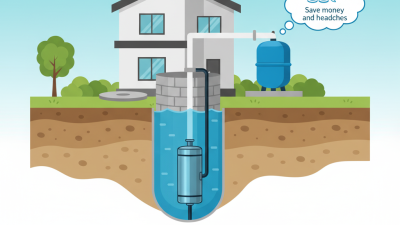
This guide examines ten common pump types, including submersible, shallow-well jet, deep-well jet, centrifugal, hand, solar, and booster models. Each design moves water differently. Submersible pumps sit below the water level and often suit deeper wells. Jet pumps remain above ground and can simplify access. Solar pumps may reduce grid dependence, but sunlight and storage capacity matter.

Small details change the decision.

Before comparing models, measure the static water level and estimate peak water use. Check the well’s tested flow rate, not only its depth. A pressure tank, foot valve, control box, or variable-speed drive may also affect the final result. Professional installers should confirm wiring, pipe sizing, and manufacturer requirements before installation.

The most expensive pump is not automatically the best. In fact, oversizing can cause short cycling, wasted energy, and premature wear. A reliable selection balances lifting height, flow rate, pressure, maintenance, and operating cost. No general guide can predict every site perfectly. Local soil, seasonal drought, and aging equipment can complicate the choice. That uncertainty deserves attention.

The sections ahead compare practical strengths, limitations, installation needs, and suitable applications. Use them as a decision framework, then verify the details with a qualified well professional.
Top 10 Types of Water Well Pumps Which One Is Best?

Define 10 Well-Pump Types by Lift, Power Source, and Pumping Principle

Top 10 Types of Water Well Pumps: Which One Is Best?

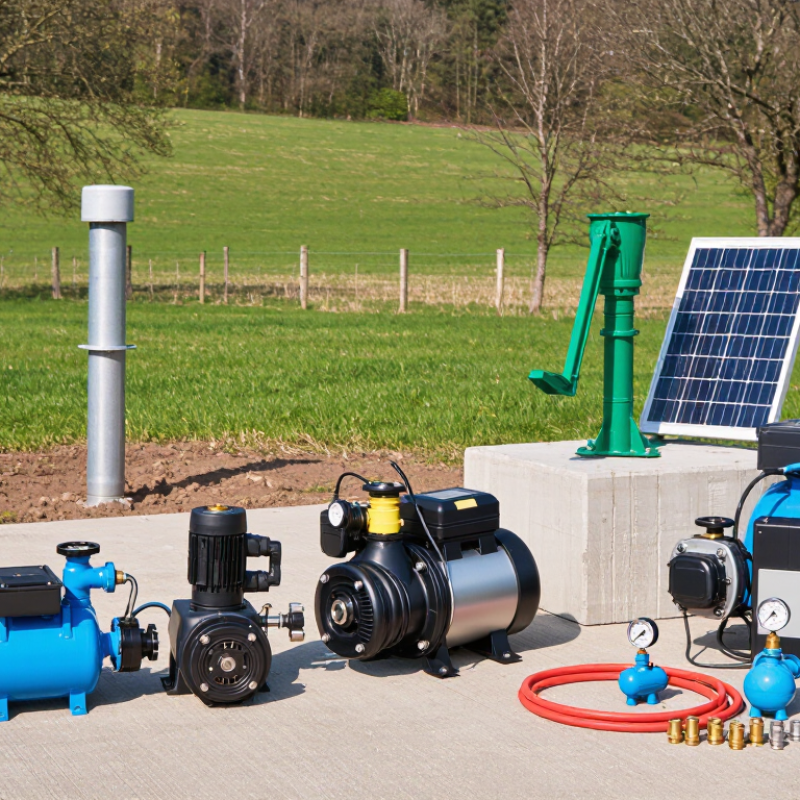
Well pumps differ by lift, power source, and pumping principle. A shallow-well jet pump uses suction for low lifts, usually above 25 feet. A deep-well jet pump uses an ejector to reach deeper water. A submersible centrifugal pump pushes water upward from inside the well. A vertical turbine pump lifts water through staged impellers. A piston pump moves water with a sealed plunger. A diaphragm pump uses flexible membranes and check valves. A hand pitcher pump relies on manual suction. A solar pump uses photovoltaic power for remote sites. A windmill pump converts wind movement into reciprocating lift. An airlift pump injects compressed air, reducing water density and raising it.

Each type has a different practical advantage. Submersible pumps suit deep wells because they avoid suction loss. Hand pumps remain useful during power interruptions, though they require physical effort. Solar systems can perform well in sunny areas, but storage tanks may be needed at night. Airlift pumps tolerate certain sediments, yet they often need strong compressors. The best choice depends on static water level, pumping depth, flow demand, pipe size, and available power. There is no universal winner.

Tips: Measure the water level after pumping, not only before it. Sediment can damage tight-moving parts. Check the well yield first. An oversized pump may cycle frequently and waste energy. A smaller pump may protect the well, but delivery can feel disappointing. This is where many installations go wrong. A qualified technician should verify pressure, wiring, sanitation, and local requirements before installation.

Compare Jet Pumps Against the 25-Foot Practical Suction Limit

Top 10 Types of Water Well Pumps: Which One Is Best?

Jet pumps are often selected for shallow wells, but their practical suction limit is about 25 feet. Atmospheric pressure creates the ceiling. At sea level, the theoretical limit is approximately 33.9 feet, according to the Hydraulic Institute’s ANSI/HI 9.6.1 guidance. Real systems lose capacity through pipe friction, fittings, temperature, and elevation. The pump may sit above the water. The water level must remain stable.

A 25-foot lift is not a design target. It is a warning line. Field assessments commonly reveal longer suction pipes, undersized lines, or leaking foot valves. These defects can cause noisy operation, cycling, and poor flow. The U.S. Department of Energy’s pumping-system guidance stresses accurate system-head calculations and adequate net positive suction head. That principle applies here, even when household wells seem simple.

Jet pumps work reasonably well when the static water level stays below this limit. They are less convincing for deep or fluctuating wells. A submersible pump pushes water upward from inside the well, avoiding most suction-lift losses. That arrangement usually improves deep-well reliability, though installation access and electrical protection matter. Well records from the U.S. Geological Survey also show that groundwater levels vary by region and season. A shallow reading in spring can mislead. Measure during the driest expected period, then size the pump for actual flow, elevation, friction, and pressure needs. Oversizing still happens.

Evaluate Submersible, Turbine, Centrifugal, and Hand Pumps by TDH

Choosing the best well pump starts with total dynamic head, or TDH. TDH combines vertical lift, pipe friction, fittings, and required outlet pressure. The U.S. Department of Energy estimates pumping systems use about 25% of industrial electricity. Small head errors can therefore create long-term waste. Hydraulic Institute guidance also stresses matching the pump curve to the duty point, not selecting by horsepower alone.

Submersible pumps usually suit deep wells because the motor pushes water upward and avoids suction limitations. They remain efficient at high TDH, though sand can accelerate wear. Turbine pumps handle high flow and deep lifts, but their shaft alignment demands careful installation. Centrifugal pumps fit shallow wells and modest TDH. They are simple, yet their performance falls sharply when suction lift or friction increases. Hand pumps need little electricity and can serve remote sites or emergencies. Output is low. Deep-lift designs are also physically demanding.

Real wells vary.

A practical comparison should record static water level, pumping water level, well yield, pipe diameter, and pressure-tank setting. For example, a pump lifting water 60 meters may face another 15 meters of friction and pressure equivalent, creating roughly 75 meters of TDH. That changes the choice. A submersible model may outperform a centrifugal pump at this point, while a hand pump remains unsuitable for daily household demand. Field measurements are imperfect, and seasonal drawdown is often underestimated. Recheck the design after one dry season.

Rank Solar, Air-Lift, Booster, and Positive-Displacement Pumps by Use

Top 10 Types of Water Well Pumps: Which One Is Best?

The best well pump depends on depth, water demand, power access, and water quality. In practical installations, solar pumps rank highly for remote farms and homes without reliable grid electricity. They work quietly, but output falls on cloudy days. A storage tank is often necessary. I once underestimated this detail, and the pump could not meet evening demand.

Air-lift pumps suit deep wells containing sand, sediment, or corrosive water. Compressed air raises water through a pipe, leaving fewer moving parts underground. However, they usually consume more energy per gallon. They fit maintenance-focused sites better than high-efficiency household systems. Booster pumps rank next for properties with weak pressure, elevated tanks, or long irrigation lines. They do not lift water from a deep well. They only increase pressure after water reaches the system.

Positive-displacement pumps rank highest when steady flow and accurate delivery matter. They perform well in low-flow applications and can handle higher pressure than many centrifugal designs. Their internal parts need careful protection from grit. For a shallow, clean-water well, a centrifugal pump may be more economical, though it is less tolerant of air and debris. A professional assessment should measure static water level, recovery rate, pipe friction, and peak demand before selection. Pump curves matter. So does installation quality.

Top 10 Types of Water Well Pumps: Which One Is Best? — Solar, Air-Lift, Booster, and Positive-Displacement Pumps Ranked by Use

Rank Pump Type Best Use Typical Well or Lift Range Typical Flow Range Power Source Key Strengths Main Limitations Overall Suitability
1 Submersible Centrifugal Pump Most residential wells, irrigation systems, and high-demand water supplies Approximately 30–1,000+ ft of total dynamic head, depending on design 5–100+ gal/min Electric power, generator, or solar-electric system Quiet operation, excellent efficiency, no priming requirement, and reliable delivery from deep wells Requires suitable well diameter, submerged electrical equipment, and professional installation ★★★★★ Best overall
2 Solar-Powered Submersible Pump Remote homes, livestock watering, agricultural storage tanks, and off-grid water systems Approximately 50–800+ ft of total dynamic head, depending on solar array and pump selection 1–30+ gal/min, varying with sunlight and head Photovoltaic panels, usually with a controller and optional batteries Low operating cost, useful where grid power is unavailable, and well suited to tank filling during daylight Output changes with weather; batteries or storage tanks may be needed for continuous service ★★★★★ Best off-grid option
3 Deep-Well Jet Pump Existing wells where a submersible pump cannot be installed or serviced easily Generally suitable for water levels up to about 200–250 ft with a two-pipe arrangement; actual limits vary 5–25 gal/min Electric motor Motor remains above ground, making inspection and maintenance more accessible Lower efficiency than many submersible pumps; requires proper piping, priming, and a larger well casing ★★★★☆ Good retrofit choice
4 Booster Pump Increasing pressure from a storage tank, cistern, municipal supply, or low-pressure well system Usually designed for pressure boosting rather than lifting from a deep water table 5–100+ gal/min Electric power; variable-speed models are common Improves household pressure, supports multiple fixtures, and can be paired with pressure controls It is not a substitute for a properly sized well pump and may be damaged by dry running or inadequate inlet pressure ★★★★★ Best for low pressure
5 Positive-Displacement Rotary Pump Low-flow applications requiring steady delivery, chemical dosing, or viscous-fluid handling Often used at moderate lift and pressure; exact capability depends on pump geometry and materials 0.1–50 gal/min Electric motor, engine, or manual drive Produces predictable flow per rotation and performs well at low flow rates and higher pressures Usually less suitable for sandy well water; requires a relief path because pressure can rise rapidly if discharge is blocked ★★★★☆ Best for controlled flow
6 Air-Lift Pump Shallow-to-moderate well development, dewatering, aeration, and applications where submerged mechanical parts are undesirable Works best when the submerged air-injection point is relatively deep compared with the water discharge level; efficiency declines with shallow submergence Highly variable; commonly used for low-to-moderate flow service Compressed air from an external compressor Few moving parts in the well, tolerates some abrasive water, and can help remove sediment during well development High energy consumption, noisy compressor operation, and generally lower efficiency than centrifugal systems ★★★☆☆ Specialized use
7 Shallow-Well Jet Pump Small homes, garden irrigation, and shallow wells with a stable water level Typically effective when the pumping water level is no more than about 25 ft below the pump; practical results vary with conditions 5–25 gal/min Electric motor Accessible above-ground installation and relatively simple servicing Limited suction lift, can lose prime, and is sensitive to leaks in the suction line ★★★☆☆ Best for shallow wells
8 Reciprocating Positive-Displacement Pump Hand pumping, low-flow deep-well service, and applications needing high pressure at modest flow Can provide substantial lift when correctly designed; manual models are commonly used for community and emergency water points 0.1–15 gal/min Manual operation, electric motor, or engine Accurate displacement, strong pressure capability, and operation without electricity when manually driven Flow is pulsating, output is limited, and moving parts require maintenance; unsuitable for very high-volume supply ★★★★☆ Best for resilience
9 Hand Pump Emergency water access, rural household supply, backup systems, and community wells Common shallow models work to approximately 25 ft; specialized deep-well designs can reach much deeper Typically 1–10 gal/min, depending on user effort and lift Human power Works during power outages, has low operating cost, and can be maintained with basic mechanical skills Labor-intensive, limited flow, and vulnerable to contamination if the wellhead and drainage are poorly protected ★★★★☆ Best backup option
10 Vertical Turbine Pump Large irrigation systems, municipal water facilities, and high-capacity wells Suitable for deep settings and high total dynamic head when properly staged 100–10,000+ gal/min Electric motor or engine Handles high flow and large pumping heads, with configurable multistage construction Higher installation cost, larger foundation requirements, and more complex alignment and maintenance ★★★★☆ Best for high capacity

Selection note: Actual performance depends on static and pumping water levels, well yield, well diameter, total dynamic head, pipe friction, water quality, electrical supply, and required flow. The listed ranges are general engineering guidelines rather than guaranteed performance figures.

Choose the Best Pump Using Well Yield, Flow, Efficiency, and 10–20% Margin

Top 10 Types of Water Well Pumps: Which One Is Best?

The best water well pump depends on measured well yield, required flow, depth, and system efficiency. Common choices include submersible, shallow-well jet, deep-well jet, hand, solar, booster, centrifugal, constant-pressure, turbine, and air-lift pumps. Each design suits different conditions. A submersible pump often works well in deep wells because it pushes water upward from below. A jet pump may suit a shallower installation, but its practical depth is limited.

Begin with a reliable yield test. Record the static water level, pumping level, and recovery time. If a well produces 8 gallons per minute, a pump should not continuously demand 12. That mistake can lower the water level, draw sediment, or cause dry running. It happens more often than people expect. A qualified technician should also calculate pipe friction, vertical lift, pressure-tank needs, and household demand.

Choose the required flow, then add only a 10–20% margin. For example, a home needing 6 gallons per minute may use a pump rated near 7 gallons per minute, not 12. Oversizing increases cycling, electricity use, and equipment stress. Efficiency matters over years, not just during installation. Compare motor input, expected operating hours, and output at the actual pressure. A small reduction in wattage can become meaningful on a frequently used system. However, published efficiency figures may not reflect worn pipes, voltage loss, or changing groundwater levels. Test the finished system under real conditions, preferably during peak household use.